Powered By Blogger
Showing posts with label Facebook. Show all posts

Thursday, 8 December 2011

Yahoo Mail in 8 Indian languages

Internet firm Yahoo India's mail service is now available in eight Indian regional languages, including Hindi and Bengali, a move that will enhance the communication capabilities of online users.
Apart from Hindi and Bengali, the latest version of Yahoo Mail now comes in languages such as Tamil, Kannada, Telugu, Malayalam, Marathi and Gujarati. "Yahoo India... announced the availability of the latest version of Yahoo Mail in eight new regional languages: Tamil, Hindi, Kannada, Telugu, Malayalam, Bengali, Marathi and Gujarati," the firm said in a statement.
The latest Yahoo Mail version is also available in 22 new languages. As per the statement, the service was rolled out simultaneously in 27 new markets, including 16 new countries, taking the total number of languages in which Yahoo Mail is available to 46 in 70 markets worldwide.
Yahoo Mail now available in 8 Indian regional languages
Yahoo Mail delivers a much faster, safer and easier online communications experience, the company said. "Yahoo India aims to deliver relevant, personal, compelling experiences and reaching our users in their native languages is a major way to deliver all the benefits of Yahoo Mail," it added.
The new version comes with various features like applications that help people be more productive and organised. In addition, users can reply instantly to messages from contacts on their Facebook, Yahoo Groups and Yahoo Mail accounts, besides other email providers, through a new reply bar. Furthermore, the new "update tab" allows people to view and share notifications and updates from social networking sites Twitter, Facebook and Zynga.

Facebook bug reveals Mark Zuckerberg's private pics


A security glitch in Facebook gave users access to Mark Zuckerberg's private pictures, including a few with his girlfriend. The social networking site has repeatedly come under
attack for its constantly changing privacy and security features that at times made private information, including photos and comments, publicly available.

The security flaw, first exposed by a bodybuilding website, was discovered yesterday by Facebook which went into damage control mode after the glitch made it possible to access its founder Zuckerberg's private photos with his girlfriend and friends.

Over two dozen photos of Zuckerberg were visible online, including those with his girlfriend Priscilla Chan at his California home, one with President Obama at the White House,
some showing him cooking meals, hanging out with friends, playing with his puppy and distributing Halloween candy to kids.

In a statement, Facebook said it had discovered a "bug" that allowed anyone to view a limited number of another user's most recently uploaded photos irrespective of the privacy
settings for these photos.

"This was the result of one of our recent code pushes and was live for a limited period of time. Upon discovering the bug, we immediately disabled the system, and will only return functionality once we can confirm the bug has been fixed."

The bug was in the site's tool through which users can report inappropriate and offensive content. A user at the website 'Bodybuilding.com' clicked on a person's profile picture, then reported to Facebook that it contained nudity or was of inappropriate nature.

Facebook, with more than 800 million users worldwide, is expected to go public next year, a move that will value the company the college dropout founded in his Harvard dorm at 100 billion dollars.

However, as Facebook's popularity skyrocketed, it took some backlash for making users' information accessible to marketing companies and advertisers.

Last month, Facebook reached a settlement with the US Federal Trade Commission, which had charged that the company "deceived consumers by telling them they could keep their
information on Facebook private, and then repeatedly allowing it to be shared and made public."

The settlement states that Facebook is required to establish and maintain a comprehensive privacy programme.

Wednesday, 7 December 2011

Online uproar against Sibal's proposal

India has urged social network companies including Facebook, Twitter and Google to remove offensive material, unleashing a storm of criticism from Internet users complaining of censorship in the world's largest democracy.
Telecoms and Information Technology Minister Kapil Sibal met executives from Facebook, Google , Yahoo and Microsoft on Monday to ask them to screen content, but no agreement with the companies was reached, he said.

Sibal denied he was promoting censorship but said some of the images and statements on social media risked fanning tensions in India, which has a long history of deadly religious violence. He said the firms had rebuffed earlier calls to take action.

Socially conservative India already censors some films and books considered obscene or likely to stoke religious conflict.

The country of 1.2 billion people created new rules earlier this year obliging Internet companies to remove a range of objectionable content when requested to do so, a move criticised at the time by rights groups and social media companies.

It was not clear if Sibal was proposing stiffer regulation, but Law Minister Salman Khurshid later said his colleague was calling for dialogue about offensive content, not censorship.

A New York Times report on Monday that said Sibal called executives about six weeks ago and showed them a Facebook page that maligned ruling Congress Party chief Sonia Gandhi and told them it was "unacceptable".

The government is very sensitive to criticism of Gandhi, whose family has dominated Indian politics since before independence from the British and has lost two prominent figures to assassination.

Officials are often keen to be seen as protectors of the family. Last year there were moves to block the English translation of a Spanish novel about Sonia Gandhi's life.

"We have to take care of the sensibilities of our people, we have to protect their sensibilities. Our cultural ethos is very important to us," Sibal said on Tuesday, after showing reporters some images he said were taken from the Internet and would likely offend religious communities.

Sibal said his ministry was working on guidelines for action against companies which did not respond to the government's requests, but did not specify what action could be taken.

"We'll certainly evolve guidelines to ensure that such blasphemous material is not part of content on any platform."

Despite the rules in place, India's Internet access is largely unrestricted, in contrast to tight controls in fellow Asian economic powerhouse China. But in line with many other governments around the world, India has become increasingly edgy about the power of social media.

India's bloggers and Twitter users scorned the minister's proposals, saying a prefiltering system would limit free expression and was impossible to implement. The phrase #IdiotKapilSibal was one of India's most tweeted on Tuesday.

"The idea of prescreening is impossible. How will they do it?...There is no technology currently that determines whether content is 'defamatory' or 'offensive'," India-based cyber security expert Vijay Mukhi told Reuters.

TAKEN ABACK

The New York Times report, which Sibal did not confirm or deny, was the focus of much of the online anger directed at the minister on Tuesday.

"I love Sonia Gandhi. She is awesome. She is God. And never wrong about anything, ever." (This msg is approved by Kapil Sibal's cyber cell)," posted twitter user Sorabh Pant.

Indian authorities were taken aback in the summer by an anti-corruption campaign that multiplied on Facebook and Twitter, drawing tens of thousands of people to street protests and forcing the government to agree to new anti-graft laws.

Last year, as part of a broader electronic security crackdown, Indian security agencies demanded access to communications sent through highly secure BlackBerry devices of Canadian smartphone maker Research In Motion .

RIM gave India access to its consumer services, including its Messenger services, but said it could not allow monitoring of its enterprise email.

Facebook said in a statement it recognized the government's wish to minimize the amount of offensive content on the web. The California-based company said it removes content that violates company rules on nudity and inciting violence and hatred.

Internet search giant Google, which owns social networking site Orkut and video-sharing site YouTube, also said it already removes content when it is illegal or against its own policy.

"But when content is legal and doesn't violate our policies, we won't remove it just because it's controversial, as we believe that people's differing views, so long as they're legal, should be respected and protected," the company said in a statement.

Yahoo India declined to comment, as did Microsoft's Indian public relations agency.

India now has 100 million Internet users, less than a tenth of the country's population of 1.2 billion. It is the third-largest user base behind China and the United States. It is seen swelling to 300 million users in the next three years.

During last year's clampdown, officials also said Google and Skype would be sent notices to set up local servers to allow full monitoring of email and messenger communications.

Britain also faced criticism last month for considering curbs on social media after recent riots even as Foreign Secretary William Hague castigated countries that block the Internet to stifle protests.

Tuesday, 6 December 2011

Sibal cries foul at morphed pics

Why Communications Minister Kapil Siban was so upset with social networking sites? Apparently, his party and government leaders have been particularly the target of “disparaging and defamatory” depictions in these sites.
Sibal met senior functionaries from Facebook, Google, YouTube and Yahoo on Monday, and asked them to evolve a mechanism to filter such “inflammatory” and “defamatory” content that could create social tension.
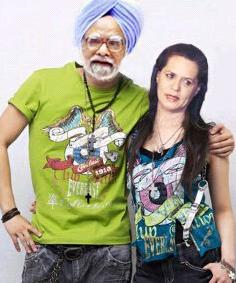
It is learnt that the Minister took a strong view on the use of morphed images of Ms Sonia Gandhi and Dr Manmohan Singh on Facebook. Sibal even warned of “stern action” against these firms if they failed to act.
Several morphed pictures of Congress top leaders are doing the rounds on Facebook and other sites. Some of these are not exactly in good taste.
Facebook and other social networking sites have become the ultimate place for ‘creative’, ‘funny’ and ‘interesting’ images, cartoons, caricatures and several other odd things for people to vent their feelings over various issues.
However, the government now wants to be big brother and warns that it is watching.

Sunday, 4 December 2011

Facebook buys Gowalla

Facebook has purchased location-based service provider Gowalla, according to a report.
CNN Money cites “a source close to Gowalla” who says Facebook has acquired the company for an undisclosed sum. The majority of Gowalla’s employees, including founder Josh Williams, are set to move from the company’s Austin, Texas, headquarters to Facebook’s in Palo Alto, Calif., to work on Facebook’s Timeline feature, according to the report.
“It’s a perfect match,” says the unnamed source quoted by CNN Money. “As far as the big picture, Gowalla’s vision is about people telling stories, and Facebook’s vision for Timeline is about stories about important moments in life.”
A rep from Gowalla declined comment on the report, citing a policy against reacting to “rumors and speculation.” Reps from Facebook could not be reached.
Meanwhile, Gowalla’s chief rival, Foursquare, released a statement about the apparent move: “Congrats to Josh and the team in Austin. Here at Foursquare, we continue to focus on building an amazing product and growing our 15,000,000-strong community.”

Friday, 2 December 2011

The lame run called T-Argument

Dr Parakala Prabhakar has been in the news recently for his dissenting voice on the issue separate state. In this article, the general secretary of Visalandhra Mahasabha describes how the T votaries resort to personal attacks and filthy language when confronted with clinical arguments. The T supporters shift the debate continually from one point to another because they can’t sensibly stick to one, argues Dr Prabhakar.
Traffic on my social networking sites has seen a tremendous surge these day. But alas, a very unhealthy one.
Whatever is my post, people eventually end up venting their spleen against on my stand on the T agitation. I don’t mind a strong dose of criticism on my position. But instead of engaging in a debate or criticism, my facebook ‘friends’ turn aggressive, and abusive. Even the presumably educated ‘netizens’ too resort to filthy language and verbal intimidation. I was amazed at the choice of words by someone who claimed to be a doctor.
Actually, my argument is still eagerly waiting for a fair crack of the whip. But so far, no luck.
Recently I posted a link to an article from the Hoot on the way media makes and breaks icons. It is innocuous and unrelated to the T issue, I thought. But I was wrong. There was a spate of comments. Again about my stand on the T issue. A post giving my impression on the lyric ‘Kolaveri’ also had the same reaction.
A couple of days ago, I told my FB friends in a post that I accept every friend request but some people are taking undue advantage of it and resorting to abuse, filthy language, and intimidation. I told them that it will not take a minute for me to delete them from my list. But I will not like to do that and made a request that they should exercise restraint and not force me to press the delete button.
Well, what do I get? Again, a generous dose of abuse. Of course, several of my friends came to my defence and engaged with those who were intemperate.
T agitators seem to labour under a delusion: they think that they are a privileged lot and cannot be questioned. They refuse to be engaged in a civilised debate. They don’t submit their views to scrutiny. They don’t want their views to be interrogated.
When I bring in socio-economic data, they say it is not about development. But till just a while ago they talked about backwardness, under-development and exploitation, theft of jobs and water, prevalence of unemployment and every other economic malady.
When economic argument is demolished, they bring in history. When I bring up the historical facts that contradict their claims, they refuse to be drawn into discussion.
Then they say that it is the majority opinion. As though having the support of majority indemnifies an opinion against any scrutiny. It is a different matter, however, that they do not have a majority support by any reckoning.
If I bring up the double standards of a political leader who is currently the loudest champion of their cause, they say their ‘movement’ cannot be reduced to the shenanigans of a political leader or his party.
They get emotional, hyper, and worked up. One person who claims to be an analyst with a leading MNC said on my Facebook wall that they will get Telangana because ‘God is there’.
When someone pointed out that he shouldn’t bring in God into this because God has many other things to do, this analyst (don’t forget that he is employed by a leading MNC) came up with the answer that is a real winner. He said, ‘because God has many other things to do, that’s why you people are doing all this. Otherwise, God would have killed you!’ How is that as an argument?
I’m sure, someone is ready to come up and say that that’s not a bona fide representative T argument.
If economic argument is not, if historical argument is not, if cultural argument is not, if linguistic argument is not, finally even if God’s intervention is also not, then, pray, what IS the argument?
This is the trick that keeps the whole thing going: If one argument collapses, they quickly disown it. And say that’s not the argument. If somebody loses an argument, they quickly disown them. And say they are not representative of the ‘movement’. They put up a new argument, or put up an old argument by a new outfit.
That is how the T argument lurches.
It’s a relay run of the lame. But it pretends to be a marathon.
Dr Parakala Prabhakar is Managing Director, RightFOLIO

Thursday, 1 December 2011

Face book to be valued $100 billion!!!

Social network Facebook is preparing to allow private investors to invest in the website next year, and hopes its first offering will value the company at over $100 billion, a media report said Tuesday.
The Wall Street Journal said a source familiar with the matter claims Facebook was preparing to launch an initial public stock offering (IPO) next year.
Facebook now reportedly has more than 800 million members, Sky News said.
Facebook's chief financial officer David Ebersman has discussed a public float with bankers but founder and chief executive officer Mark Zuckerberg has not decided on any terms and his plans could change, the daily said.
The company was started seven years ago by Zuckerberg in a Harvard University dormitory room.
A Facebook representative declined to comment on the issue.

Panja Powerful Dialogues

ఈ మధ్య ప్రతి సినిమాకి పంచ్ డైలాగులు ప్రాణంగా ఉంటున్నాయి. కొంత మంది ఫ్యాన్స్ వాళ్ల క్రియేటివిటీ మేరకు కొన్ని సొంత డైలాగ్స్ రాసి సోషల్ నెట్ వర్క్స్ లో పోస్ట్ చేస్తున్నారు. పంజా ట్రైలర్ లో వదిలిన ఓ పంచ్ డైలాగ్ బాగా పేలింది. దాన్ని బేస్ చేసుకుని రాశారో.. నిజంగానే ఆ డైలాగులు సినిమాలో ఉన్నాయో తెలీదు కానీ పంజా డైలాగులంటూ కొన్ని సంభాషణలు తెగ సర్కులేట్ అవుతున్నాయి. ఇవి నిజంగా సినిమాలో ఉన్నాయా.. ఉంటే సినిమాపై ఎక్స్ పెక్టేషన్స్ పెంచేందుకు ప్రొడ్యూసర్లే వీటిని లీక్ చేసి జనంలోకి వదిలారా.. లేక ఎవరైనా అభిమానుల ఊహాశక్తికి నిదర్శనమా అనేవి వదిలేస్తే.. ఈ డైలాగులు విన్నవాళ్లు ఓ సారి పవర్ స్టార్ పవన్ కళ్యాణ్ గొంతులో వీటిని ఊహించేసుకుని తెగ మురిసిపోతున్నారు.